What a Workout Tracker Should Actually Do
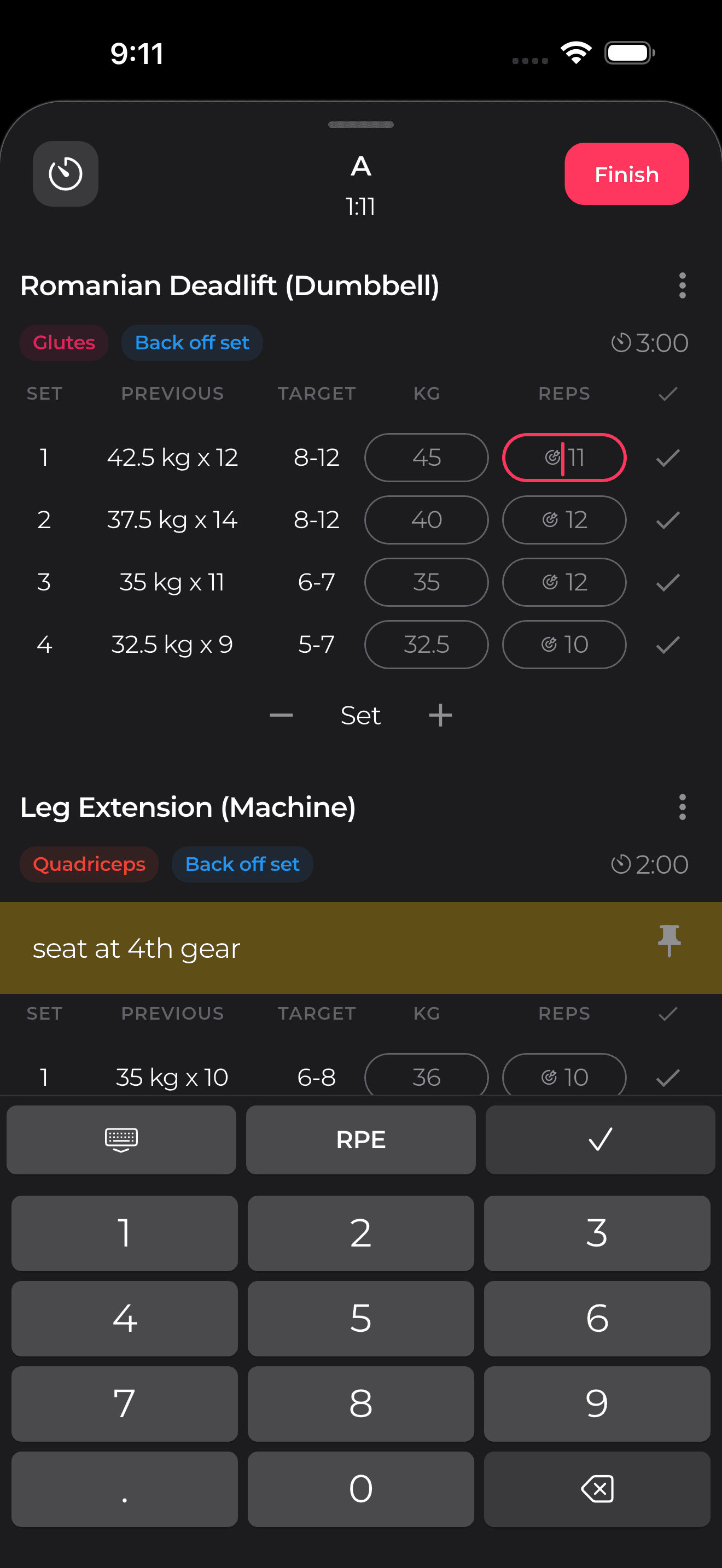
A workout tracker earns its place when it makes the next session easier to run. It should help you start the workout quickly, see what happened last time, log the current sets without fighting the screen, and leave you with a clearer target for next time.
For progressive lifters, the job is continuity. You need to know what you did, how it felt, what changed, and what the next move should be. If the app only stores numbers, the progression system still lives in your head.
Features That Matter for Strength and Hypertrophy
| Feature | Why it matters |
|---|---|
| Low-friction set logging | If logging is slow when you are tired, the rest of the app does not matter. The set screen has to stay usable mid-session. |
| Last-session context | You should see the last working sets, notes, and outcome while you are choosing the next attempt, not only after the workout is over. |
| Planned load and rep targets | A tracker should show what you are trying to hit today, not make the target live in a separate note, spreadsheet, or memory. |
| Progression rules | Charts show what happened. Progression logic turns the result into the next action: add load, add reps, repeat, hold, or back off. |
| Program-aware exercise swaps | Changing equipment should not erase the goal of the slot. The replacement should preserve the muscle, movement pattern, and training intent. |
| Miss and deload handling | Repeated misses need a planned response. A good tracker gives fatigue a path besides blindly forcing the same jump again. |
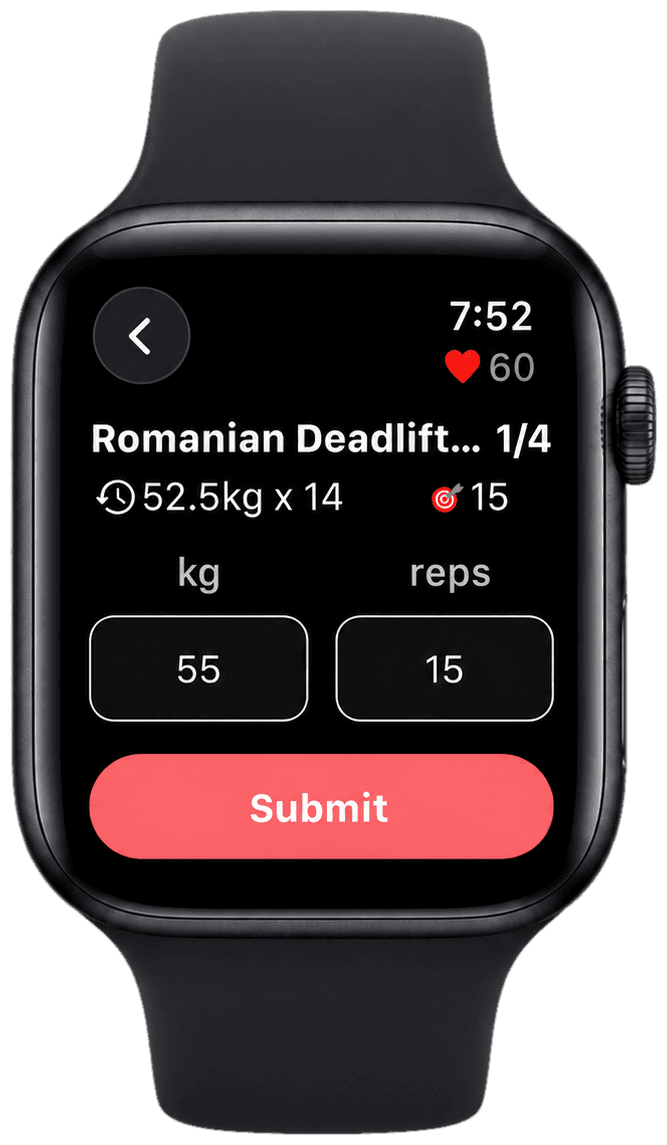
| Phone and watch logging | The best log is the one you can complete without breaking the set flow, whether the phone is in your hand or nearby. |
| Decision-useful analytics | Analytics should explain what to adjust: strength trend, volume, body-part balance, recovery pressure, and where performance is stalling. |
| Import and export | Your history should not be trapped. Old sessions, templates, and training records should stay usable when your system changes. |
For progressive strength and hypertrophy training, the app should connect your records to targets, rules, swaps, deloads, and clear adjustments instead of stopping at a history page.
Where Basic Trackers Fall Short
Basic workout trackers usually solve the first problem: remembering what happened. That helps, but it is not the whole job. If your app records bench press 185 lb for 8, 8, 7 and then leaves you to decide what to do next, you still have to run the program manually.
That works for a while. Then sessions get more complex, fatigue changes, accessories rotate, and different lifts need different rules. A passive log becomes a pile of history instead of a training system.
- A deadlift may need slower load jumps than a cable row.
- A stalled lift may need a repeat or deload instead of another failed increase.
- An exercise swap should preserve the goal of the slot, not erase the context.
- A missed workout should not make the whole plan harder to understand next week.
Why Olympian Is Built Differently
Olympian is designed around progression, not record keeping alone. Your workout history feeds built-in progressions, rep targets, exercise swaps, deloads, analytics, coaching, ranks, and Apple Watch logging. Logging is the input. Better next-session decisions are the output.
- Log the set — capture what actually happened, not what was planned.
- Read the trend — look across sessions, not just one good or bad day.
- Apply the rule — let progression, deload, or swap decisions follow the data.
- Adjust the target — update rep targets, load, or volume for the next session.
A good tracker closes that loop instead of making you rebuild it after every workout.
How to Choose the Right App
| If your main problem is | Look for |
|---|---|
| Forgetting what you did | Fast logging and clear exercise history. |
| Choosing the next load | Exercise-level rules, rep targets, and progression logic. |
| Managing hypertrophy work | Volume views, effort tracking, and flexible exercise swaps. |
| Training through stalls | Deload handling, repeat rules, and notes that stay with the lift. |
| Staying consistent | Low-friction mobile logging and a plan that remains readable over time. |
The best workout tracker is the one you can use under fatigue and still trust months later. If you care about progression, choose the app that treats progression as part of the workflow instead of a chore you do after the workout.
Bottom Line
A lightweight tracker is fine if you only need a cleaner logbook. Progressive lifters should ask for more. The app should remember the work, keep the goal visible, and help decide the next useful step. That is the difference between tracking workouts and actually running training.