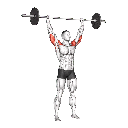
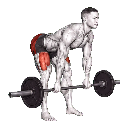
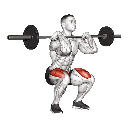
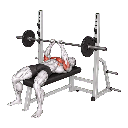

What Boring But Big Is
Boring But Big is one of the best-known 5/3/1 supplemental templates. The usual structure is straightforward: perform the main 5/3/1 work for the day, then perform five sets of ten reps for the same lift or a close variation. That second part is where the name comes from. It is not complicated, but it is a lot of repeated work.
The point of BBB is hypertrophy and technical practice. You get enough volume to build muscle around the main lifts while keeping the training week organized around squat, bench press, deadlift, and overhead press. It is a strong template when recovery is respected and a messy one when the lifter treats every supplemental set like a max-effort test.
BBB At a Glance
- Week 1Base building
Set Weight Reps 1 65% 5 2 75% 5 3 85% 5+ 4 BBB 5×10 ~50–60% - Week 2Progress
Set Weight Reps 1 70% 3 2 80% 3 3 90% 3+ 4 BBB 5×10 ~50–60% - Week 3Intensify
Set Weight Reps 1 75% 5 2 85% 3 3 95% 1+ 4 BBB 5×10 ~50–60% - DeloadRecover
Set Weight Reps 1 40% 5 2 50% 5 3 60% 5 4 BBB 5×10 ~30–40%
Basic BBB Structure
| Block | What it does |
|---|---|
| Main 5/3/1 work | Keeps the lift anchored to the training max and weekly rep targets. |
| BBB supplemental work | Adds 5x10 volume for the main lift or a close variation. |
| Assistance work | Covers rows, chins, single-leg work, trunk, arms, or weak points. |
| Deload or reset | Keeps accumulated fatigue from turning the block into survival training. |
The supplemental percentage should be conservative enough that all five sets are clean. If the first week already feels like a contest, the later weeks will probably punish your technique and recovery.
Choosing The Supplemental Lift
- Same-lift BBB is specific and easy to track, but it can be brutally fatiguing.
- Opposite-lift BBB, such as squat main work followed by deadlift-volume work, can distribute stress differently.
- Close variations can reduce joint irritation while keeping the pattern useful.
- Machine or dumbbell substitutions can work for hypertrophy when the barbell version is beating you up.
Do not choose the variation just because it looks harder. Choose it because it helps the block progress. A variation that lets you train hard, recover, and come back next week is usually better than the heroic option you dread by week two.
Assistance Work Should Stay Honest
BBB already provides a lot of main-lift volume. Assistance work should support the block, not become a second bodybuilding program stapled to the end. Rows, chins, hamstring work, abs, rear delts, arms, and single-leg work can all fit, but the dose has to respect the five sets of ten you already did.
- Main 5/3/1 work — the priority lift and its weekly rep targets.
- 5x10 supplemental volume — the BBB work that drives hypertrophy.
- Small assistance menu — rows, chins, hamstrings, abs, arms. Keep it modest.
- Recovery check — if the first two layers are already hard, shrink the third.
How To Track BBB In Olympian
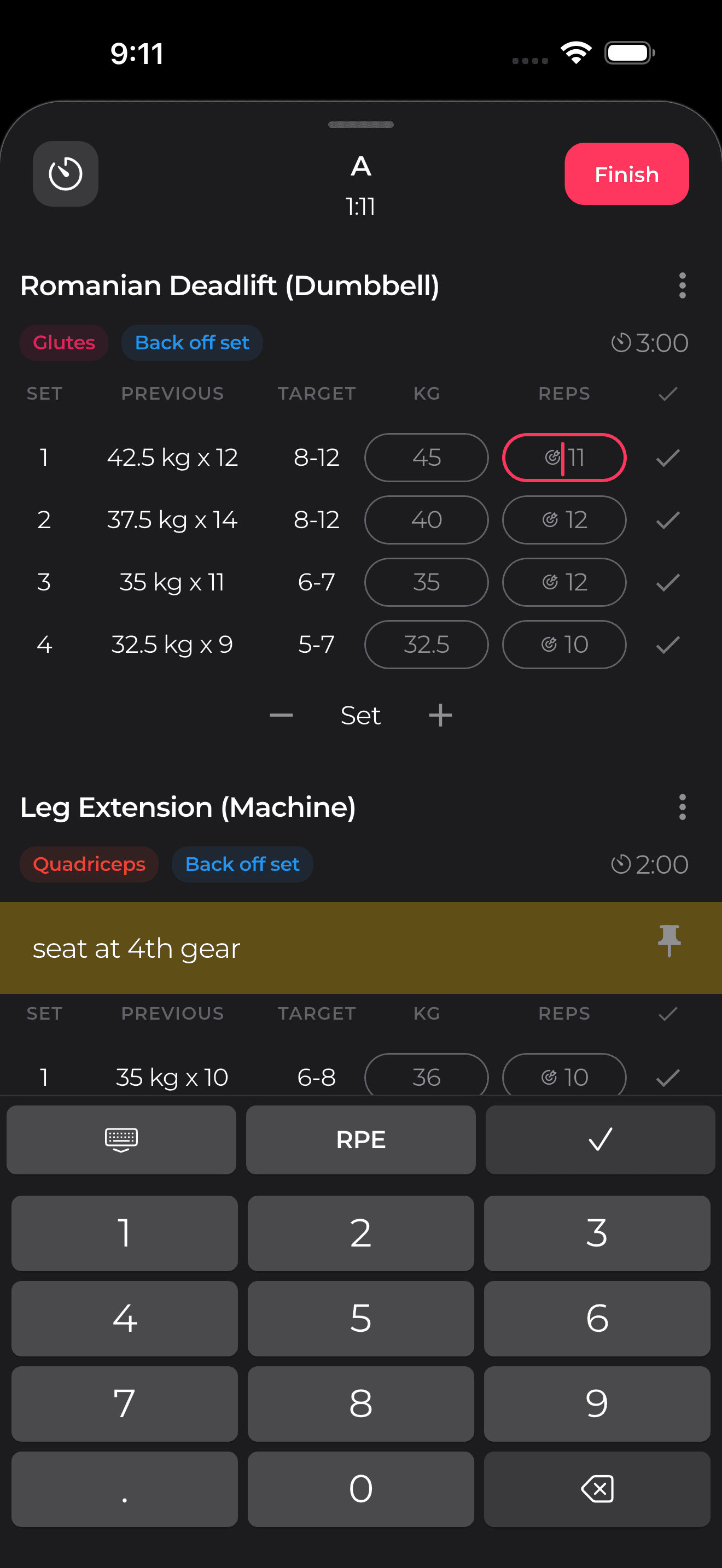
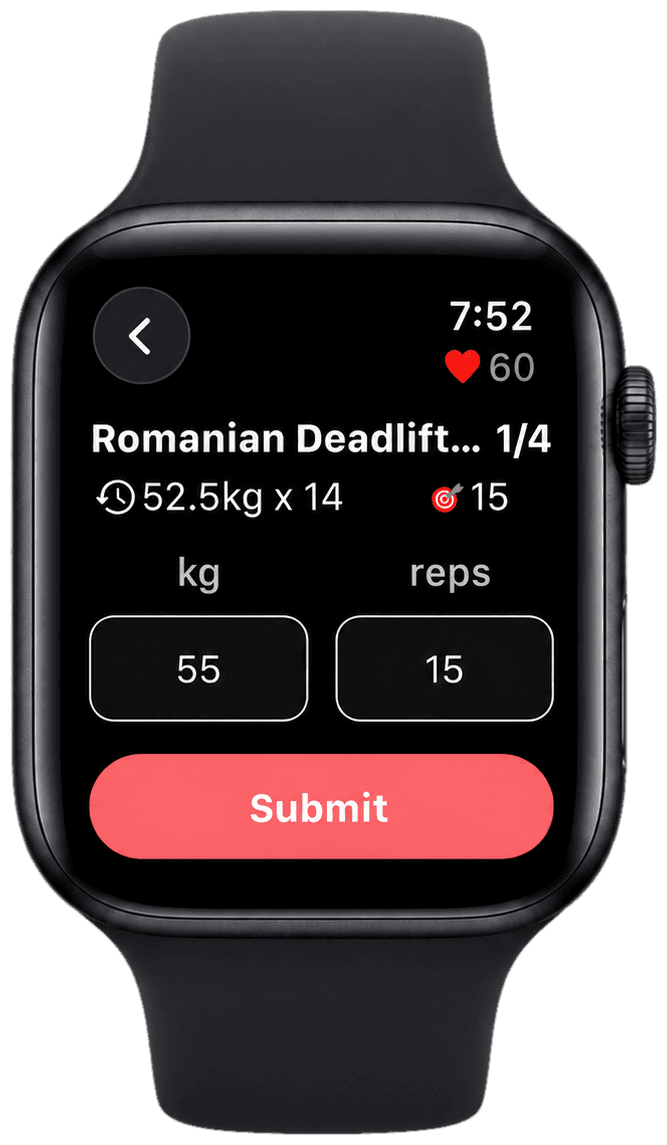
In Olympian, keep the main lift on the 5/3/1 Special Progression and log the BBB sets as supplemental work. That keeps the training max logic clean while still making the volume visible in your history and analytics.
This matters because BBB succeeds or fails through accumulated work. Olympian helps you see whether the 5x10 work is building momentum, causing repeated missed targets, or creating enough fatigue that a deload or percentage adjustment makes sense.
Bottom Line
Boring But Big is a useful 5/3/1 option when you want more size and can recover from high supplemental volume. Start lighter than your ego wants, track the work clearly, and let the block prove that the volume is helping before adding more.