A Bad Workout Is Not Yet a Strength Plateau
A true training problem is a pattern, not merely a disappointing number. Your last set can fall short because the rest period was shorter, the rack setup changed, you trained later than usual, the previous session was unusually hard, or your rep standard became stricter. Those details do not make the result meaningless. They change what the result can reasonably be compared with.
Test-retest research in resistance-trained lifters found that repetition performance was not perfectly identical across visits, even under a structured protocol. The amount of variation also differed by load. That study does not tell us how many ordinary gym sessions prove a plateau, but it does show why a single set should not carry the whole decision. A useful first step is to log workouts consistently so later comparisons have enough context.
What Counts as a Comparable Exposure?
An exposure is the next planned appearance of the same exercise or a deliberately comparable variation. Three exposures do not have to occur in one calendar week. If you bench once per week, the review may span three weeks. If you bench twice, it may take ten days. Count the programmed exposures, not arbitrary days since the bad workout.
| Keep reasonably stable | Record when it changes | Why it matters |
|---|---|---|
| Exercise and equipment | Different bar, machine, bench, shoes, straps, or stance | A variation may have a different skill and leverage demand |
| Set and rep target | Top set versus back-off set, or a new rep range | Five heavy reps and twelve moderate reps test different qualities |
| Rest periods | Rushed or unusually long rests | Shorter recovery can reduce later-set performance |
| Technique standard | Pause, depth, range of motion, grip, or tempo | Cleaner execution can lower the number while improving the training |
| Order in the workout | Lift moved after another fatiguing exercise | The same load may now be performed under more local fatigue |
| Body and day context | Sleep loss, illness, travel, energy intake, stress, or unusual soreness | Training readiness can change without long-term strength changing |
Comparable does not mean laboratory-perfect. It means similar enough that you know which important differences remain. If exposure one used a competition-style paused bench and exposure two used touch-and-go reps after heavy overhead pressing, their raw rep counts should not be treated as a clean trend. Keep both in the log, but label the comparison as weak.
The Three-Workout Test: Flag, Classify, Decide
| Exposure | Question | Minimum evidence to record | Default response |
|---|---|---|---|
| 1: Flag | Was this result unexpectedly worse? | Load, reps, RIR or RPE, technique note, rest, obvious context | Do not overhaul the program; explain the mismatch first |
| 2: Classify | Did the same pattern repeat? | Same measures plus whether other lifts changed | Hold a comparable target or make a small safety/technique correction |
| 3: Decide | Is the trend recovering, isolated, or spreading? | Three-exposure line plus program compliance and recovery context | Choose the smallest change that matches the pattern |
The test is deliberately slower than reacting to one result and faster than waiting indefinitely. It does not replace the immediate decision after a failed set; use the separate guide on what to do when you miss reps for that session. Here, the job is to determine what the repeated evidence means for the plan.
Exposure One: Look for Normal Noise Before a New Theory
Start with the boring explanations. Was the load entered correctly? Were the plates, machine increments, or dumbbells actually equivalent? Did you change the range of motion? Was your final warm-up too heavy? Did the workout order change? Did you rest two minutes instead of four? A correction here is not making excuses; it is protecting the comparison from a known confounder.
- Performance: compare completed reps, load, and set-to-set drop-off—not only the best set.
- Effort: record RIR or RPE, but allow uncertainty rather than pretending every estimate is exact.
- Technique: note one or two observable standards such as depth, pause, bar path, or range of motion.
- Recovery context: record unusually short sleep, illness, travel, high stress, low food intake, or residual soreness without assuming one item caused the result.
- Compliance: note skipped work, added sets, exercise-order changes, or loads that did not match the written program.
Effort ratings are useful context, not a lab instrument. In one study of trained men, estimates of two repetitions in reserve were more accurate with heavier loads and became less accurate as loads got lighter. Use the RIR progression guide to calibrate the estimate, and read a change from 3 RIR to 0 RIR as a meaningful clue rather than exact proof of a specific fatigue level.
Exposure Two: Separate Five Different Explanations
| Explanation | Pattern to look for | Do not confuse it with |
|---|---|---|
| Normal noise | One low result followed by a return toward the prior range | A permanent loss of strength |
| Program mismatch | Target repeatedly exceeds what the current progression, frequency, or set scheme supports | A motivation failure |
| Fatigue context | Several lifts feel harder, warm-ups slow, or performance falls after accumulated work or disrupted recovery | A diagnosis of overtraining syndrome |
| Technical inconsistency | Rep standard, setup, bar path, depth, or range changes enough to alter the task | Proof that the muscle itself stopped adapting |
| Concerning symptoms | Persistent or worsening pain, sudden unexplained loss, dizziness, fainting, chest symptoms, or unusual weakness | A programming puzzle to solve online |
Program mismatch is usually lift-specific and repeatable. For example, every prescribed five-kilogram jump may turn controlled triples into grinders, while accessories and other main lifts progress normally. That points toward the size or timing of the progression step. It does not automatically call for more volume, a new split, or greater effort.
Fatigue context is broader. A peer-reviewed review of sleep-loss studies found an overall negative effect on physical performance, while also reporting meaningful differences by task and by the pattern and timing of sleep loss. Record sleep as context; do not calculate a universal load reduction from hours slept. If deterioration spreads across the plan, compare it with your training volume and recent loading before assuming the main lift needs more work.
Technical inconsistency can imitate both improvement and regression. A shallower squat may produce more load with less comparable range. A new, honest depth standard may temporarily lower the logbook number while making the lift more repeatable. Use video from a consistent angle when appropriate, but judge only a few visible standards. Endless frame-by-frame analysis can create a new technique every week and destroy continuity.
Exposure Three: Match the Change to the Pattern
| Three-exposure result | Most useful interpretation | Next step |
|---|---|---|
| Down, then back to baseline | Likely an isolated poor exposure or resolved context | Resume the planned progression only when the target is again controlled |
| Flat numbers, lower effort | Progress may be present without a rep or load record | Hold the exercise and let the progression rule work |
| Flat numbers, rising effort | The current target is becoming less repeatable | Repeat or reduce the next target and audit the progression rule |
| One lift down; related work stable | Lift-specific setup, skill, scheduling, or prescription issue | Change one relevant variable, not the entire program |
| Several lifts down; recovery context poor | Accumulated fatigue or non-training stress may be obscuring performance | Reduce training stress and review recovery; use a full deload guide if needed |
| Data still incomparable | The review did not isolate a trend | Standardize the next exposure before drawing a conclusion |
A plateau review chooses direction; it does not need to contain an entire new program. If the evidence points to accumulated fatigue, use the deload week guide. If the issue is that you keep forcing load while execution deteriorates, revisit the broader progressive overload guide. If the block has simply run its course, review how long a mesocycle should be instead of inventing a universal week count here.
Prefer one reversible change with a stated reason. Repeat the load. Reduce one progression jump. Restore the intended rest period. Move the lift earlier in the session. Remove unplanned work. Reduce a small amount of volume. Keep that change long enough to see whether the next comparable result improves. Changing load, exercise, split, volume, tempo, and nutrition at once may make the next workout different, but it will not tell you which decision helped.
Three Worked Examples
Example one: a lifter normally benches 100 kilograms for five reps at about 2 RIR. Exposure one produces four reps at 0 RIR after a rushed warm-up and two-minute rests. Exposure two returns to five reps at 1 RIR with the usual four-minute rests. Exposure three reaches five reps at roughly 2 RIR. The pattern recovered when the comparison was restored. There is no need to replace the bench plan; the useful correction is protecting rest and warm-up consistency.
Example two: the same lifter gets four reps at 0 RIR across all three exposures, while pauses and setup remain consistent and other pressing work is stable. The written progression required another load jump despite the prior target never becoming repeatable. That is a program-match problem. Repeat or reduce the load and audit the progression step. The bench press guide can help preserve a consistent setup, but a technique cue should not be used to hide an unrealistic prescription.
Example three: squat, bench, and rows all lose reps over the review window. Warm-ups feel unusually hard, the lifter added several unplanned sets, and sleep has been disrupted. No single observation proves the cause, and this is not enough to label overtraining syndrome. The pattern supports reducing training stress and restoring the written plan before adding work. Compare the squat itself against stable standards in the squat guide, then use the broader hypertrophy programming guide only if the goal or full program needs review.
When Not to Wait for Three Workouts
The review window is not a command to repeat an unsafe exposure. Stop or modify the session when technique can no longer meet a safe standard, equipment is unsuitable, or a load is clearly wrong. Do not test the same painful movement three times simply to complete the framework.
The sports-science consensus literature also warns that distinguishing ordinary fatigue, functional overreaching, nonfunctional overreaching, and overtraining syndrome is difficult and depends on the course of recovery and exclusion of other causes. A short gym log is useful evidence for a coach or clinician, but it is not a diagnostic instrument. Avoid attaching a clinical label to yourself because several workouts went poorly.
Use the Log as a Decision Record
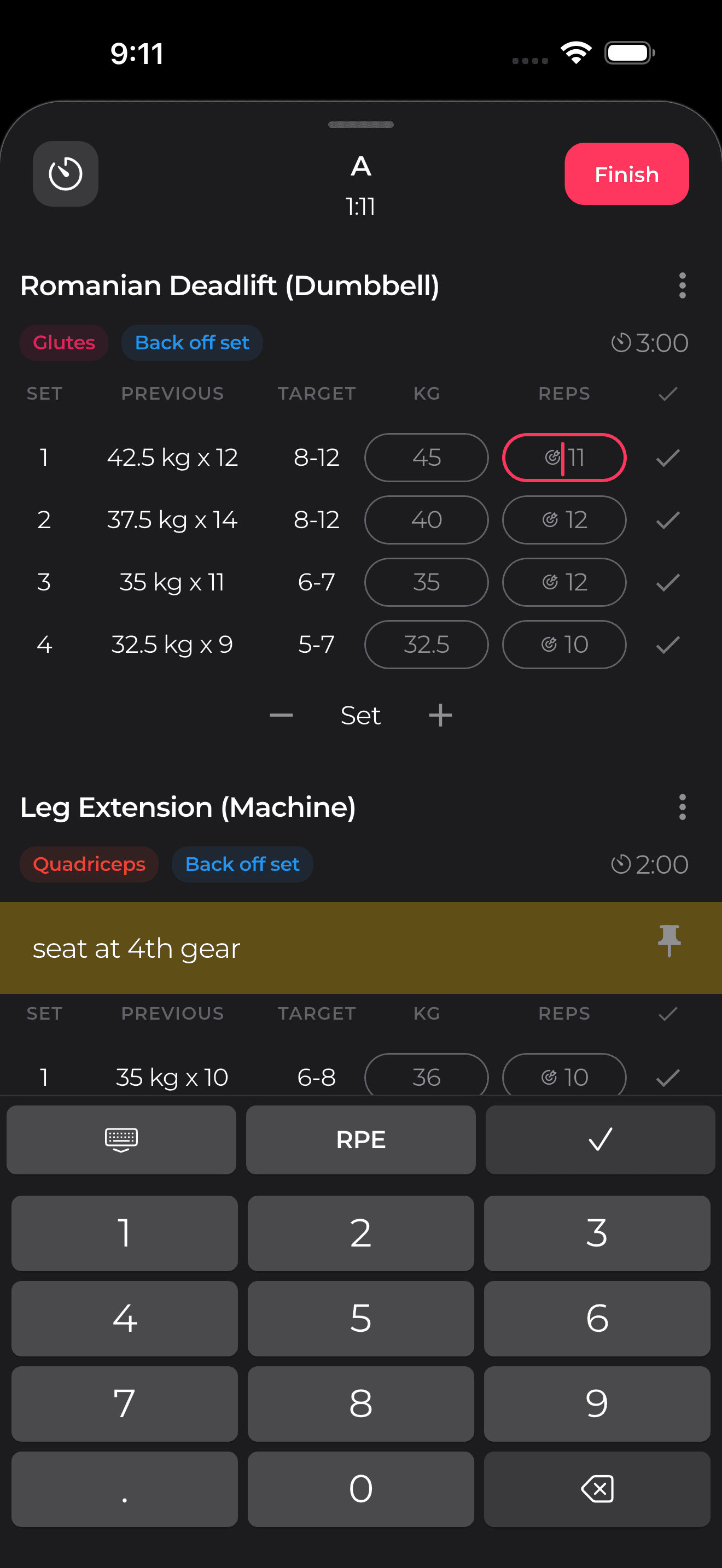
For each exposure, write the target before training and the result after it. Record the exercise, load, reps, sets, effort estimate, rest, one technique standard, and only the recovery context that was meaningfully unusual. Then write the next action and its reason. That final sentence turns the log from a scrapbook into a decision record.
- Target: what the program asked for before the session began.
- Result: what you completed without rewriting the rep standard afterward.
- Cost: RIR or RPE, set drop-off, and whether technique stayed repeatable.
- Context: the few changes that could weaken the comparison.
- Decision: hold, progress, reduce, standardize, or seek qualified help—and why.
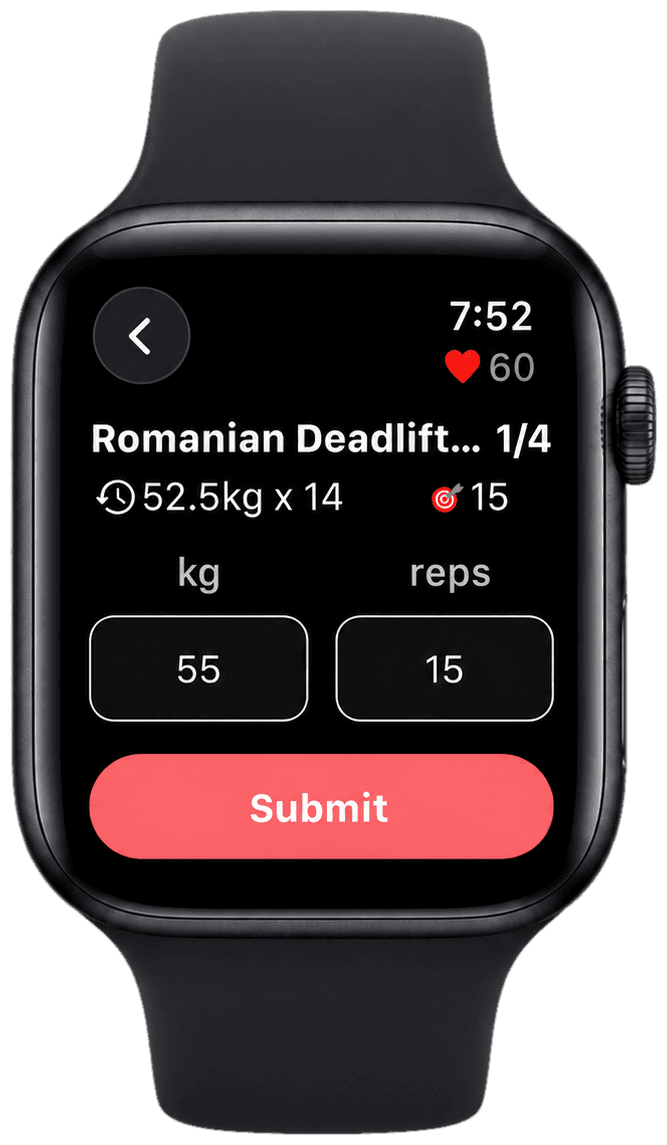
Olympian can keep performance history, effort, notes, progression targets, and training-block context together so the next exposure is compared with the plan rather than with memory. The product does not turn three entries into a medical diagnosis. Its useful role here is continuity: preserving the evidence behind a small, explainable training decision.
Limits of the Three-Workout Test
- Three exposures are an editorial compromise between overreacting and waiting indefinitely; they are not a universal physiological threshold.
- A novice whose technique changes rapidly may have less comparable data than an experienced lifter repeating a stable movement.
- A lift performed once per week creates a longer review period than a lift performed three times per week.
- RIR, technique notes, sleep, and soreness are informative but imperfect measures; none identifies a cause alone.
- A planned overreaching phase, taper, exercise change, or testing week changes what stable performance should look like.
- Pain and concerning symptoms belong outside this decision framework and may require qualified clinical assessment.
The goal is not to prove that every low number was harmless or that every three-session decline requires intervention. The goal is to replace the vague thought “I am getting weaker” with a narrower conclusion: this result recovered, this lift is technically inconsistent, this target no longer fits, fatigue appears across the plan, or the data are not yet comparable. Once the conclusion is that specific, the next change can be specific too.